
Posted by Ian Carter Designs
The Commodores Nightshift costumes stand as one of the most enduring examples of stage costume design in music history, worn by the legendary group for nearly two decades of world tours.
Of all the projects I’ve worked on in 40+ years—from major Hollywood films to celebrity red carpets—one of the most rewarding was creating the signature performance costumes for The Commodores, particularly their iconic “Nightshift” looks. Today, I’m taking you behind the scenes of how these costumes came to be and what made them work so well for nearly two decades of performances.
The Commodores “Nightshift”
Grammy Award-Winning Era
by a Duo or Group with Vocal
(Nicholas replaced Lionel Richie)
Los Angeles
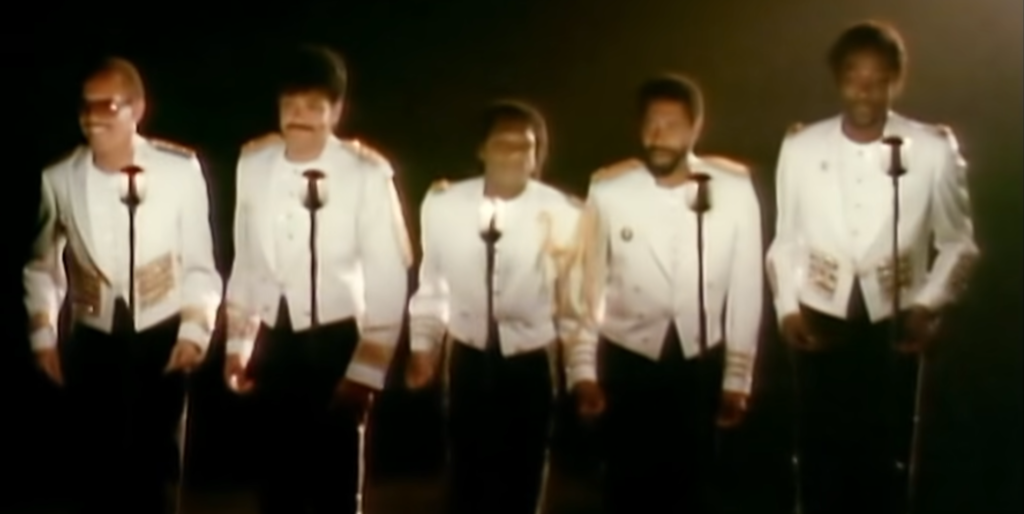
Watch: The Commodores Perform “Nightshift” (117M+ Views)
The Commodores performing their Grammy Award-winning “Nightshift” wearing the iconic stage costumes designed by Ian Carter. This official music video has been viewed over 117 million times, showcasing the Commodores Nightshift costumes that are now permanently displayed at the Alabama Music Hall of Fame.
The Background: From Valet to Designer
My relationship with The Commodores began in 1981, when I was hired as their personal valet through Ruthie West, a legendary Hollywood tailor I was working for at the time. I had relocated from New York to Los Angeles the year before, initially to pursue engineering, but I soon discovered that my true passion was sewing and design.
As the valet for The Commodores, I traveled the world with the group, managing their personal needs during tours. Once they discovered my sewing skills—which I’d been developing since age 14, inspired by my mother—everything changed.
The Transition
The Commodores were already superstars when I joined them. They’d had massive hits and were performing at the highest level. But they needed someone who could:
- Create a stage costume design that matched their sophisticated image
- Create a coordinated band costume design fashion/appearance that worked for their entire background band (The Mean Machine
- Produce durable Commodores Nightshift costumes that could survive rigorous touring
- Understand both their musical evolution and visual brand
I went from valet to stage costume designer, and then eventually to tour manager – a journey that lasted until 2017.
Designing the Commodores Nightshift Costumes for a Grammy-Winning Comeback
When the group released “Nightshift” in 1985, it represented a significant musical evolution for them. The song was a tribute to Marvin Gaye and Jackie Wilson, and it marked a more mature, sophisticated era for the band.
The stakes for these costumes were incredibly high. ‘Nightshift’ wasn’t just another song—it won the Grammy Award for Best R&B Performance by a Duo or Group with Vocal at the 28th Annual Grammy Awards in 1985. This was The Commodores’ first Grammy and their major comeback after Lionel Richie’s departure, with new co-lead singer J.D. Nicholas joining Walter “Clyde” Orange – proving the group’s continued excellence. The song’s tribute to late soul legends Marvin Gaye and Jackie Wilson resonated deeply with audiences, and the costumes needed to match the gravitas and sophistication of both the Grammy-winning performance and the song’s emotional weight.
The Performsance Costume Design Brief
The performance costume design needed to:
- Match the song’s sophisticated tone – “Nightshift” wasn’t a party anthem; it was an emotional tribute requiring elegant, refined staging
- Work under stage lighting – From intimate venues to large arenas, the costumes had to look spectacular under all conditions
- Allow full performance freedom – The stage performers moved, danced, and performed with energy; costumes couldn’t restrict
- Create visual unity – Each member needed to look cohesive while maintaining individual presence
- Withstand touring demands – These costumes would be worn repeatedly, cleaned frequently, and packed/unpacked constantly
- Photograph well – For album covers, press photos, and eventually music videos
The Design Process
Research and Inspiration: I studied their previous stage looks, analyzed contemporary formal wear trends, and considered what would set them apart visually while honoring the song’s tribute nature.
Fabric Selection: This was critical. I needed materials that:
- Draped beautifully under stage lights
- Didn’t show wrinkles easily (crucial for touring)
- Allowed movement and breathability
- Looked expensive and sophisticated
- Came in colors that worked for all skin tones in the group
Color Palette: We chose rich, deep colors that photographed well and worked under various lighting conditions. The costume design palette needed to feel cohesive across all band members while allowing for individual distinction.
Construction Technique: Stage costumes require different construction than street clothes:
- Reinforced stress points (shoulders, armpits, inseams)
- Strategic stretch panels for movement
- Moisture-wicking linings for hot stage conditions
- Easy-access fasteners for quick changes
- Duplicate pieces for cleaning rotation
The Creation Process
Pattern Making
I created custom patterns for each band member. While the overall design was coordinated, each costume was tailored to the individual’s:
- Body proportions
- Movement style
- Personal comfort preferences
- Role in the group’s visual hierarchy
First Fitting
Initial fittings revealed necessary adjustments:
- Sleeve length variations based on arm movements during performance
- Seat room adjustments for sitting during certain numbers
- Collar modifications for individual neck shapes and comfort
- Length adjustments based on each member’s height and proportions
Performance Testing
This is where stage costumes differ from street wear. I had the group actually perform in the costumes—not just stand in them. We discovered:
- Which seams needed reinforcement
- Where additional stretch was required
- How fabrics behaved under hot stage lights
- Whether quick changes were feasible with the chosen closures
Final Adjustments
Based on performance testing, I made final modifications before creating the actual performance-ready versions.
Creating Multiples
For touring, we needed:
- Primary performance set for each member
- Backup set (in case of damage or cleaning)
- Sometimes a third set for extended tours
This meant creating identical costumes multiple times—a process requiring meticulous documentation to ensure consistency.
The Details That Made It Work
Lighting Considerations
Stage lighting dramatically affects how costumes appear. What looks perfect in normal light might:
- Wash out under bright white spots
- Look completely different under colored gels
- Create unwanted shine or glare
- Disappear into dark backgrounds
I tested fabric swatches under various lighting conditions before committing to final materials. This prevented surprises during actual performances.
Movement Engineering
Musicians move differently than actors. The Commodores needed to:
- Reach for microphones without pulling or binding
- Move their arms freely while playing instruments
- Dance and perform choreographed movements
- Sit during certain portions of the show
- Move quickly backstage for any costume changes
I engineered movement into the costumes through:
- Strategic fabric choices (stretch where needed, structure where required)
- Gussets in key areas
- Proper ease in the pattern
- Reinforced construction at stress points
Comfort in Performance
A performer who’s uncomfortable in their costume shows it on stage. I ensured:
- Breathable linings to manage heat
- Non-irritating fabrics against skin
- Proper weight distribution (some embellishments are heavy)
- Comfortable waistbands for extended wear
- Collars that didn’t chafe during movement
The Commodores Grammy-Winning Costumes on Tour: The Reality
Durability Testing
After winning the Nightsshift Grammy Award for Best R&B Performance, the Commodores Nightshift costumes faced their biggest challenge: a grueling world tour schedule. These Nightshift Grammy Award winning stage costumes needed to maintain their pristine appearance while surviving:
- Multiple performances per week
- Frequent cleaning and pressing
- Constant packing and unpacking
- Travel through various climates
- Years of use
The Results: The costumes held up remarkably well. My construction techniques—developed over years of experience—ensured they maintained their appearance despite rigorous use.
Maintenance Protocol
I established care instructions:
- Specific cleaning methods
- Pressing techniques that wouldn’t damage fabrics
- Minor repair procedures for tour staff
- Storage recommendations
- When to contact me for major repairs or adjustments
Adjustments Over Time
Bodies change, even for professional performers. Over the years, I:
- Made alterations as individuals’ measurements changed
- Updated elements to keep looks fresh while maintaining brand consistency
- Repaired or replaced worn components
- Created additional pieces as needed
The Impact and Legacy
Visual Identity
The “Nightshift” costumes became synonymous with The Commodores. They:
- Appeared in countless performances worldwide
- Were featured in music videos and promotional materials
- Became part of the group’s visual brand
- Photographed consistently well in various media
Professional Recognition
This project established my reputation as someone who could:
- Create signature looks for major performers
- Deliver costumes that balanced aesthetics with practicality
- Understand the unique demands of touring musicians
- Maintain long-term relationships with clients
The Ultimate Recognition: Alabama Music Hall of Fame
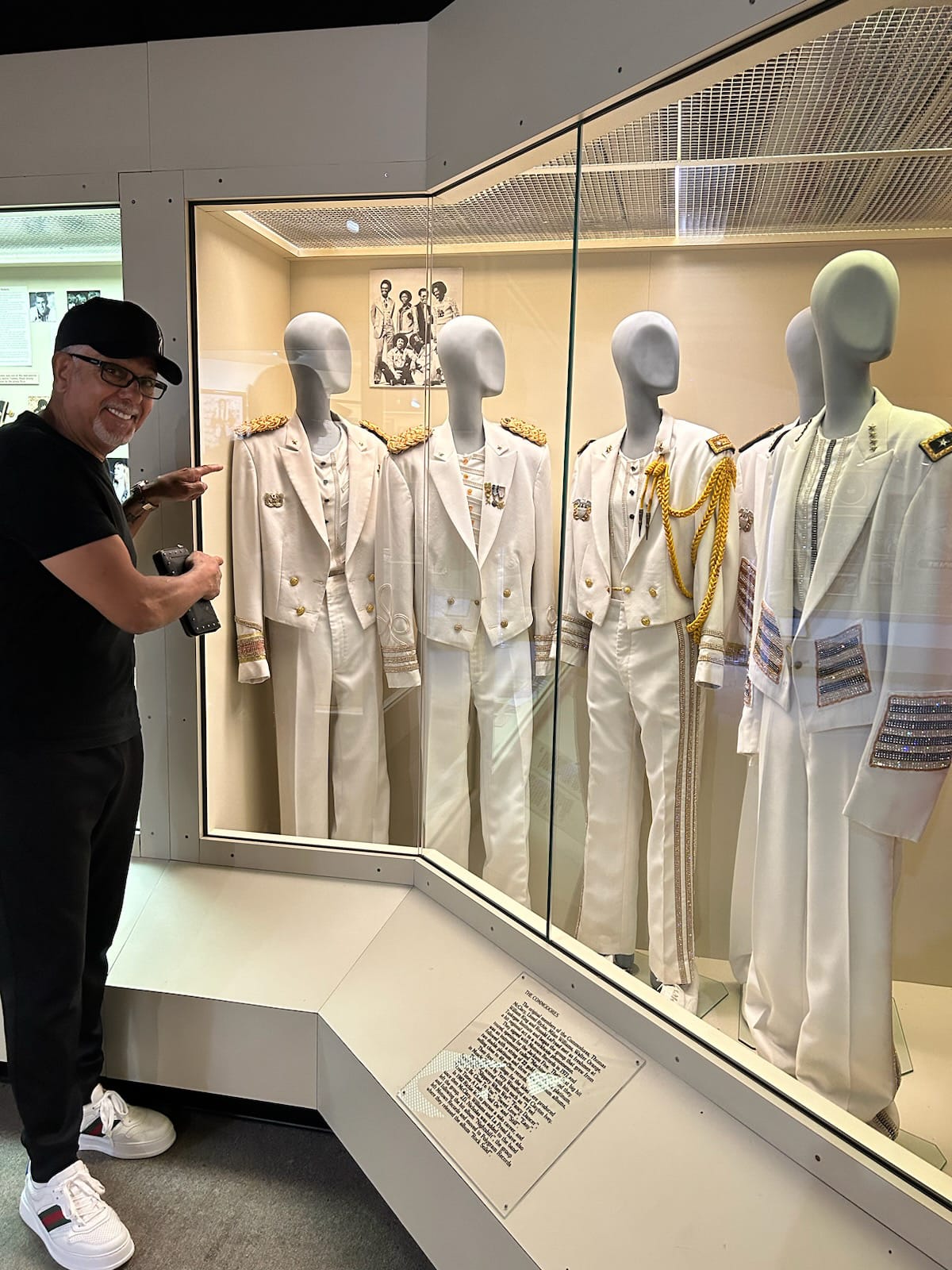
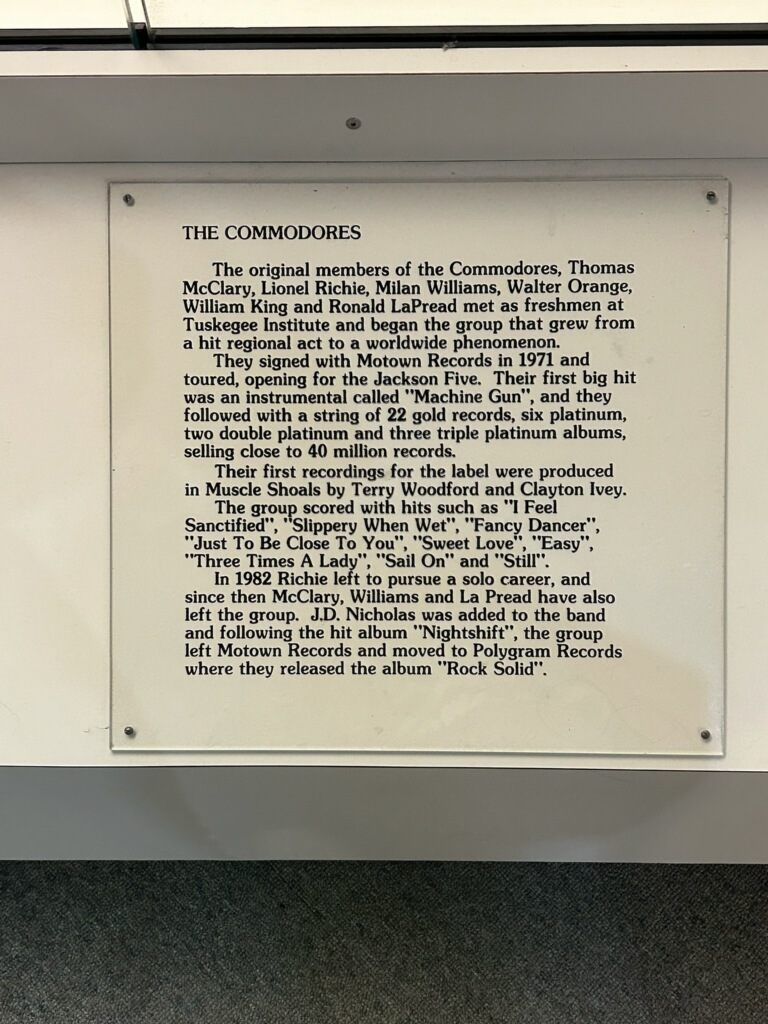
The Commodores Nightshift costumes achieved something few stage costumes ever do—they became part of music history. Today, the original costumes are permanently displayed at the Alabama Music Hall of Fame in Tuscumbia, Alabama, preserved as an iconic piece of American music heritage.
Recently, J.D. Nicholas—the Commodores’ lead singer who replaced Lionel Richie—visited the museum and sent me this photo of the display. Seeing a current Commodores member standing before these costumes, decades after I created them, was an incredibly moving moment. These weren’t just performance wear—they were wearable art that became inseparable from the group’s identity.
The fact that a major music museum chose to preserve and display the Commodores Nightshift costumes speaks to their cultural significance. From concept sketches in my Los Angeles studio to a permanent museum exhibit in Alabama—this is the journey every costume designer dreams of.
Lessons Learned
This project taught me invaluable lessons about stage costume design:
- Durability is non-negotiable – Beautiful costumes that fall apart on tour are failures
- Test everything – Never assume; actually perform in costumes before finalizing
- Document meticulously – Detailed records enable duplicates and repairs
- Build relationships – Understanding performers personally improves costume outcomes
- Plan for the long term – Tour costumes are investments requiring sustainable design
The Broader Impact on My Career
The success of The Commodores’ costumes led to:
- Nearly 20 years as their tour manager (in addition to costume work)
- Opportunities with other major performers
- Recognition in the music industry
- Understanding of how to create performance costumes that actually work
This experience informed every subsequent stage costume project, from individual artists to complete band wardrobes.
What Made It Successful
Looking back, several factors contributed to the success of these costumes:
1. Deep Understanding of the Client
I wasn’t just a tailor hired for a job—I traveled with the group, understood their music, knew their personalities, and had their trust.
2. Technical Expertise
40+ years of sewing experience meant I knew how to construct garments that would survive touring demands.
3. Attention to Detail
Every seam, every fabric choice, every measurement was considered carefully.
4. Performance-First Thinking
I never prioritized aesthetics over functionality. The costumes had to work for actual performances.
5. Long-Term Planning
These weren’t disposable costumes—they were designed to be signature looks for years.
6. Collaborative Approach
I listened to feedback, incorporated suggestions, and worked with the group to ensure everyone felt confident.
The Continuing Influence
Even decades later, I reference this project when working on new stage costumes. The principles that made The Commodores’ costumes successful apply to:
- Solo artists preparing for tours
- Musical groups needing coordinated looks
- Special event performance wear
- Any situation where costumes must perform as hard as the performers
Advice for Musicians Seeking Stage Costumes
Based on this experience, here’s what I recommend:
Start Early
Don’t wait until weeks before a tour to think about costumes. Quality work requires time.
Prioritize Fit and Comfort
Stage presence suffers when performers are uncomfortable. Insist on proper fittings.
Invest in Quality
Cheap costumes look cheap and won’t survive touring. Quality costumes are investments.
Plan for Duplicates
Always have backup costumes. Things happen on tour.
Work With Experienced Professionals
Stage costume design requires specific expertise beyond standard tailoring.
Test Before Committing
Actually perform in costumes before finalizing—you’ll discover necessary adjustments.
Maintain Your Investment
Follow care instructions, repair damage promptly, and treat costumes as the professional tools they are.
The Intersection of Art and Craft
Creating The Commodores’ “Nightshift” costumes exemplifies what I love about costume design: it’s where artistry meets technical craftsmanship.
The Art:
- Visual design that enhances performance
- Color and silhouette choices that create impact
- Understanding how costumes contribute to storytelling
The Craft:
- Expert pattern making and construction
- Knowledge of fabrics and their properties
- Problem-solving when challenges arise
- Attention to every technical detail
When art and craft come together successfully, you get costumes that serve performers beautifully for years—exactly what happened with The Commodores.
Still Creating Stage Magic
Today, I bring these same principles to every stage costume project, whether for:
- Touring musicians
- Special event performers
- Theatrical productions
- Award show appearances
The fundamentals learned through projects like The Commodores’ “Nightshift” costumes continue to inform and improve my work.
Let’s Create Your Signature Stage Look
If you’re a performer or musical group seeking stage costumes that combine visual impact with practical performance needs, I’d love to discuss your vision.
Ian Carter Designs
Phone: 323-683-4754
Based in Los Angeles
Over 40 years creating performance costumes for music legends. From The Commodores to contemporary artists, bringing the same commitment to excellence to every project.
Services Include:
- Custom stage costume design and construction
- Tour wardrobe development
- Group coordination for bands and ensembles
- Duplicate costume creation
- Ongoing tour support and maintenance
Contact me today to discuss your performance costume needs.
Want to see more behind-the-scenes case studies? Let me know which projects you’d like to hear about next in the comments below.